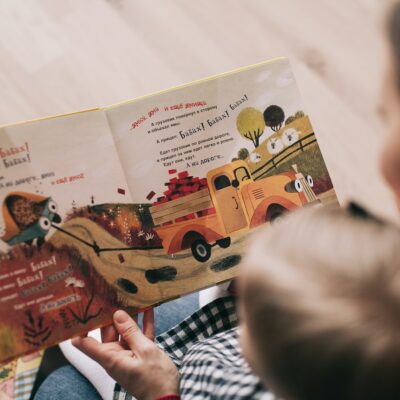
Why Early Reading Habits Shape Strong Academic Writing Skills

Strong academic writing does not begin at university, nor does it suddenly appear when a student starts working on a dissertation. It develops gradually, and platforms like https://proredaction.com/ are often used later in that journey to support students, yet the process usually starts much earlier than most people realize. The foundations of clear argumentation, structured thinking, and confident written expression are closely tied to early reading habits – especially those formed through children’s books.
For websites focused on children’s literature, this connection is not only relevant but essential. Children’s books play a direct, measurable role in shaping the skills students later rely on when they face complex academic tasks, including long-form research writing and dissertations. Understanding this progression helps parents, educators, and students see reading not as entertainment alone, but as long-term academic preparation.
Reading as the First Writing Teacher
Before children ever write a full paragraph, they are already learning how language works. Through repeated exposure to stories, sentence patterns, and narrative flow, young readers internalize the mechanics of written communication. This learning happens naturally, without formal instruction, but its impact is profound.
Reading teaches children how ideas are introduced, developed, and concluded. It shows them how cause and effect operate within a text and how details support a central idea. These same principles later reappear in essays, research papers, and dissertations – only in a more formalized and demanding context.
After just a few years of consistent reading, children begin to absorb skills that later become academic essentials:
- They develop an intuitive understanding of sentence structure and grammar.
- They learn how vocabulary functions within context rather than in isolation.
- They recognize how information is organized to guide a reader from one idea to the next.
These early competencies reduce the cognitive load students face later. When they reach higher education, they can focus on research and analysis rather than struggling with basic expression.
Vocabulary Growth and Conceptual Precision
One of the most direct links between early reading and academic writing is vocabulary development. Children’s books – especially those that are well-written and age-appropriate – introduce words in meaningful contexts. This contextual learning is far more effective than memorization.
A strong vocabulary allows students to express complex ideas with precision. In academic writing, vague language weakens arguments, while specific and accurate word choices strengthen them. Students who read widely as children are more comfortable selecting the right term, adjusting tone, and avoiding unnecessary repetition.
This matters greatly at the dissertation level, where clarity and nuance are essential. Students who lack early exposure to rich language often rely heavily on external writing help later, not because they lack intelligence, but because their linguistic foundation is underdeveloped.
How Narrative Structure Becomes Academic Structure
Children’s stories follow recognizable patterns: a beginning that sets context, a middle that develops conflict or ideas, and an ending that resolves them. These patterns are not abandoned in academic writing – they are refined.
When students write essays or dissertations, they are expected to:
- Introduce a topic clearly
- Develop arguments logically
- Support claims with evidence
- Conclude with synthesis and insight
Students who grew up reading stories already understand this progression intuitively. They may not consciously label it as “structure,” but they feel when a text flows and when it does not. This internal sense of organization becomes a powerful tool in academic contexts.
In contrast, students without strong early reading habits often struggle to organize their thoughts. Their writing may include good ideas, but those ideas appear scattered or underdeveloped. This is one of the main reasons many students later seek professional assistance with academic writing – it compensates for a structural skill that was never fully formed.
Reading Comprehension and Critical Thinking
Academic writing is inseparable from reading comprehension. Before students can write well, they must understand what they read, evaluate sources, and engage critically with ideas. These skills begin developing in childhood through interaction with stories, characters, and themes.
Children who are encouraged to talk about what they read – why a character acted a certain way, how a problem was solved, or what might happen next – are practicing analytical thinking. This early analysis evolves into the ability to compare theories, critique arguments, and build original perspectives in academic writing.
Midway through a student’s educational journey, the benefits of early reading become especially visible:
- Students read academic texts more efficiently and with better understanding
- They identify key arguments and supporting evidence more easily
- They are less intimidated by long or complex materials
- They transition more smoothly into independent research writing
These advantages significantly reduce the stress associated with major academic projects, including dissertations.
Confidence, Voice, and Writing Independence

Another often overlooked outcome of early reading is confidence. Children who grow up around books tend to view written language as familiar and approachable. Writing does not feel like a foreign or threatening task – it feels like an extension of something they already know.
This confidence directly affects how students approach academic writing later in life. Confident writers are more willing to revise, seek feedback, and refine their arguments. They see writing as a process rather than a one-time performance.
Students without this background may approach writing with anxiety, relying heavily on external help for structure, wording, or clarity. While online writing assistance can be extremely valuable – especially at the dissertation level – it is most effective when it builds on an existing foundation rather than replacing it.
Why This Matters for Children’s Book Platforms
For a website centered on children’s books, highlighting this connection reinforces the real-world value of early reading. Children’s literature is not separate from academic success; it is one of its earliest drivers.
By promoting reading as a lifelong skill rather than a childhood phase, children’s book platforms contribute to long-term educational outcomes. They support not only imagination and enjoyment, but also the development of future students who can think clearly, write effectively, and navigate demanding academic challenges with confidence.
Conclusion: A Straight Line from Storytime to Scholarship
The journey from a picture book to a dissertation may seem long, but it is surprisingly direct. Early reading habits shape how students process information, organize ideas, and express themselves in writing. These skills accumulate over time, forming the backbone of academic success.

Related Posts

The Role of Structured Guidance in Children’s Books and Dissertation Writing
Children’s Books: Fueling Imagination, Values, and Lifelong Learning

The Magic of Children’s Books: Sparking Young Imaginations One Page at a Time

The History of Children’s Books: From Oral Tales to Modern Classics

Resources and Strategies for Writing a Dissertation on Children’s Literature

Nurturing Your Child’s Interest in Reading

The Positive Effects of Reading on Children and Adults

The Power of Words: How Children’s Literature Shapes Language Skills for the Workplace

How Reading Habits in Childhood Impact Career Success